Farmsight
Small farms can't afford drones, so we designed a shared platform that makes precision agriculture accessible, visual, and actionable without the cost of ownership.
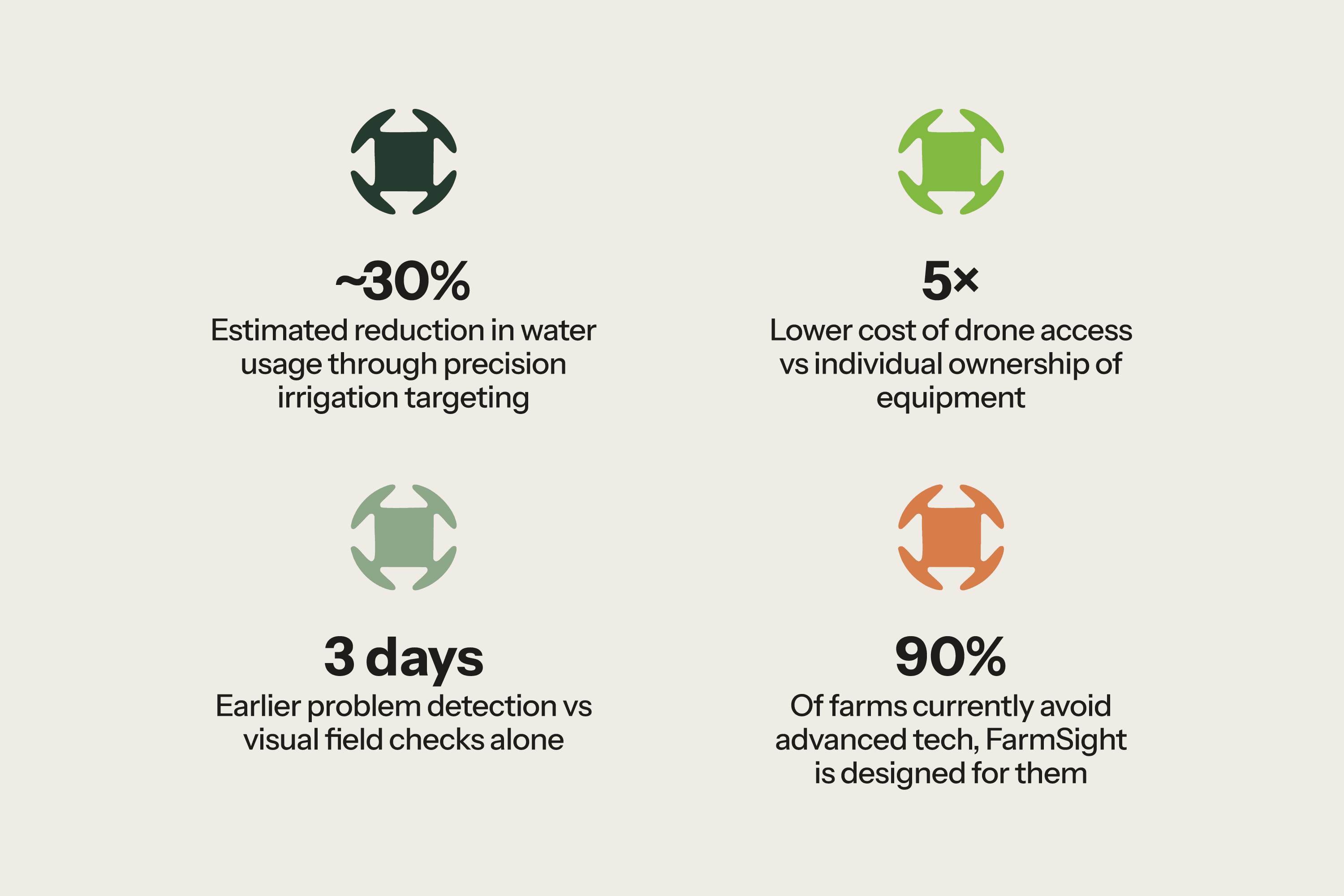
Farmsight is a speculative tablet-first platform born from real conversations with farmers. It turns drone data into clear spatial decisions, reducing water usage, cutting monitoring costs, and closing the gap between big agri-tech and the 90% of farms it currently ignores.
Client
Industry
Year
My Role
What's broken for small farms today
Byron has managed rangelands from Tennessee to California. He knows his land intimately, but he's making grazing and irrigation decisions based on field walks and gut instinct, not data. Not because he's resistant to technology. Because the tools that exist were never designed for someone like him.
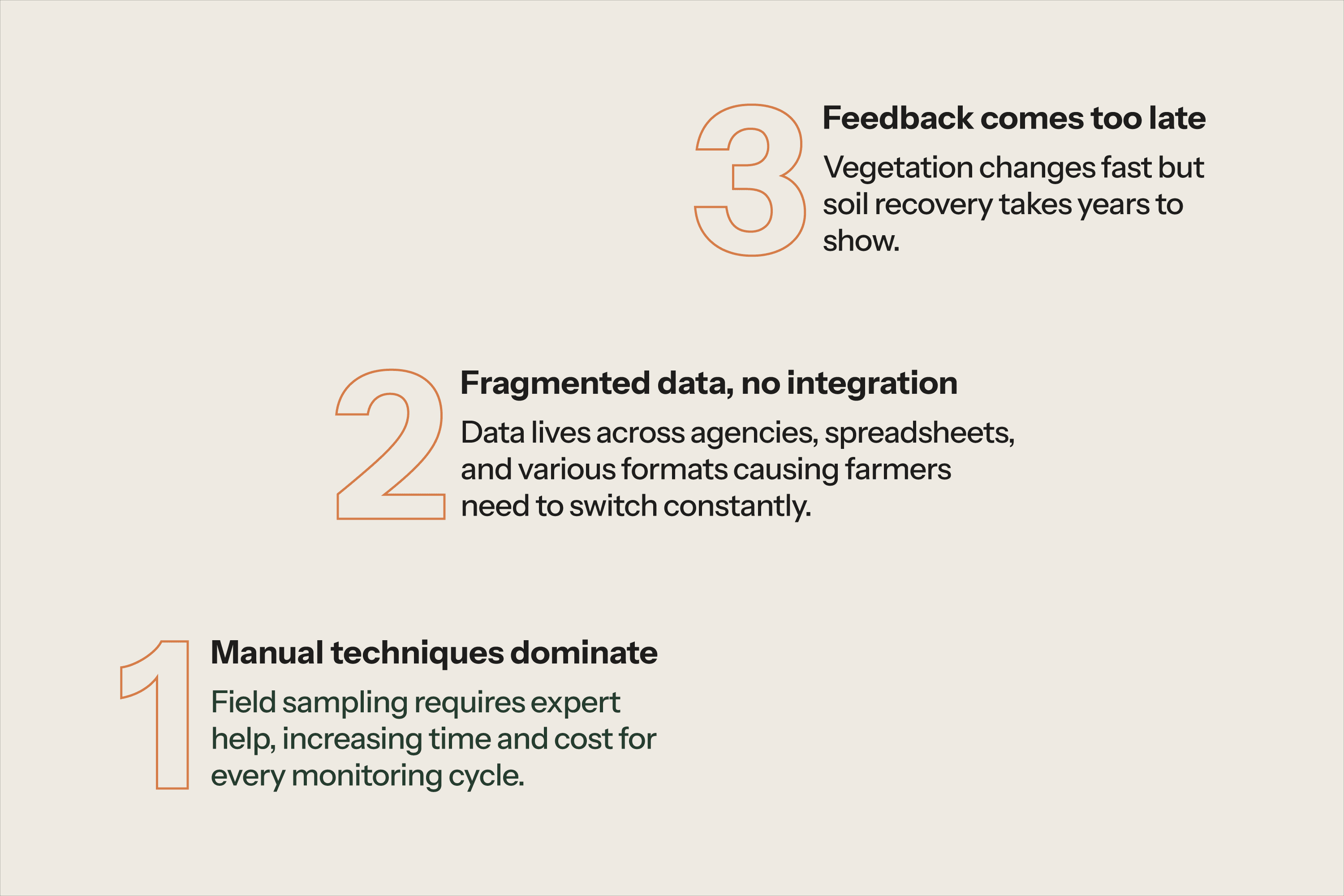
3 structural problems in the current monitoring landscape.

Six findings that shaped every design decision
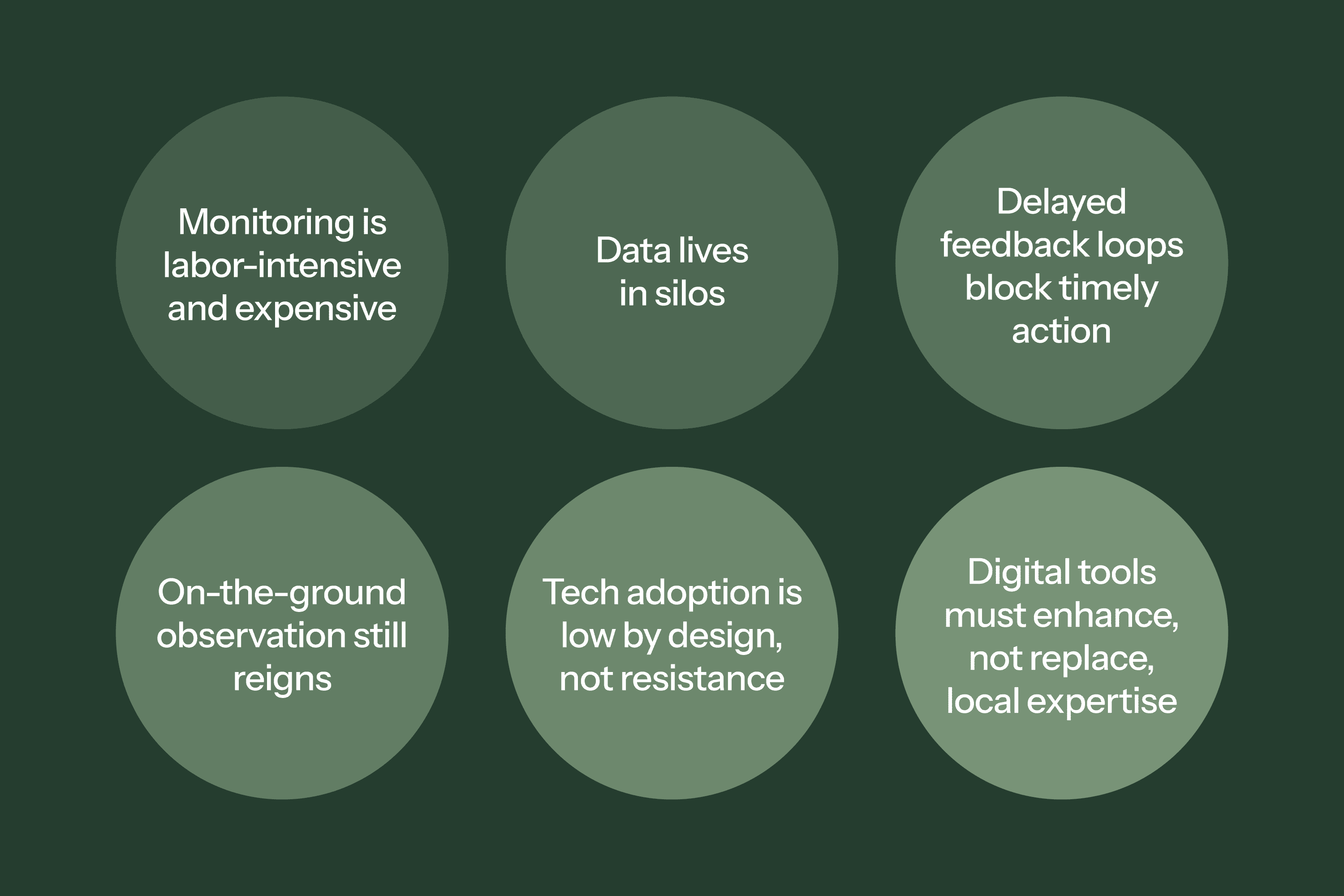
Five decisions that trace directly back to a specific interview or research finding.
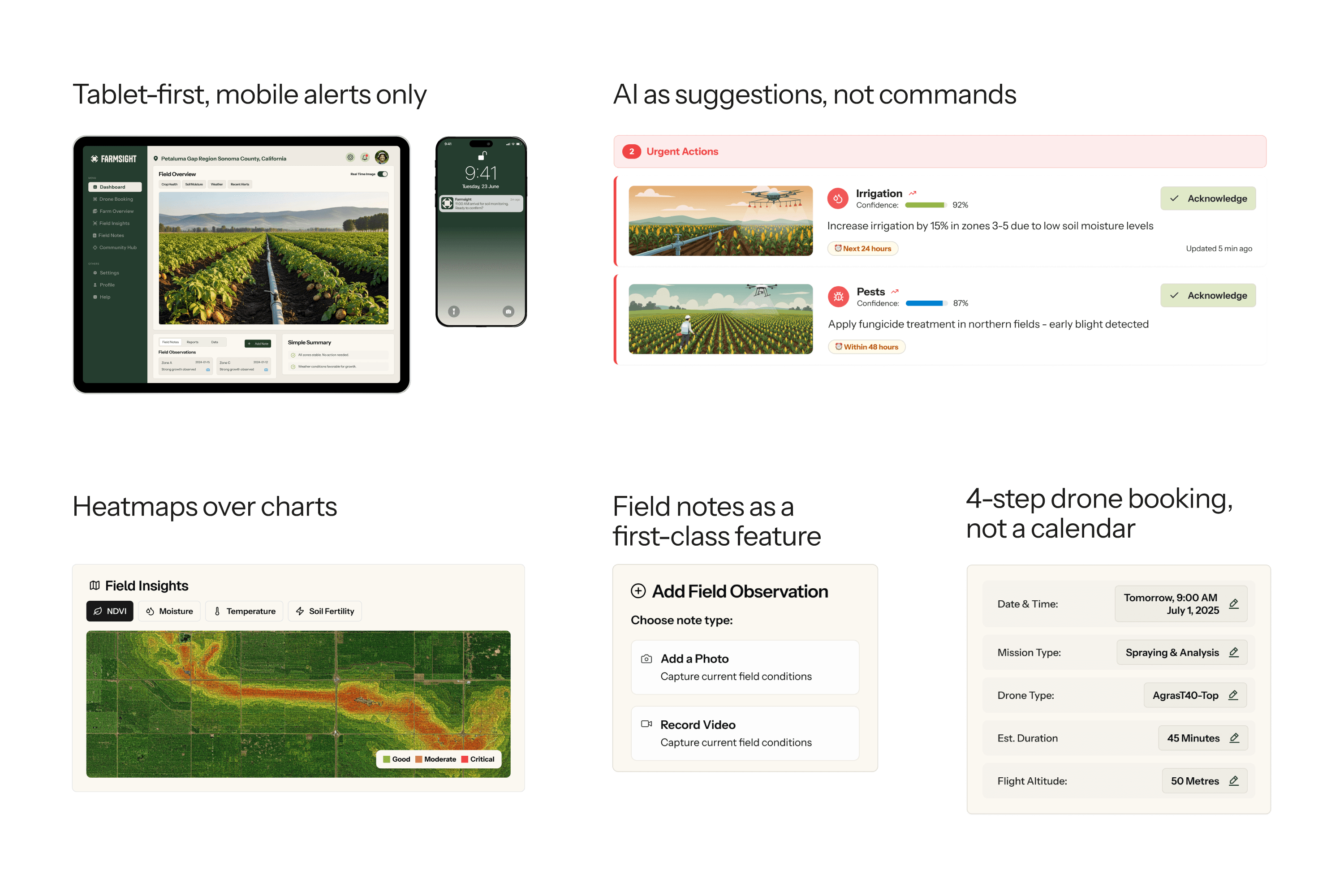
FINAL DESIGNS
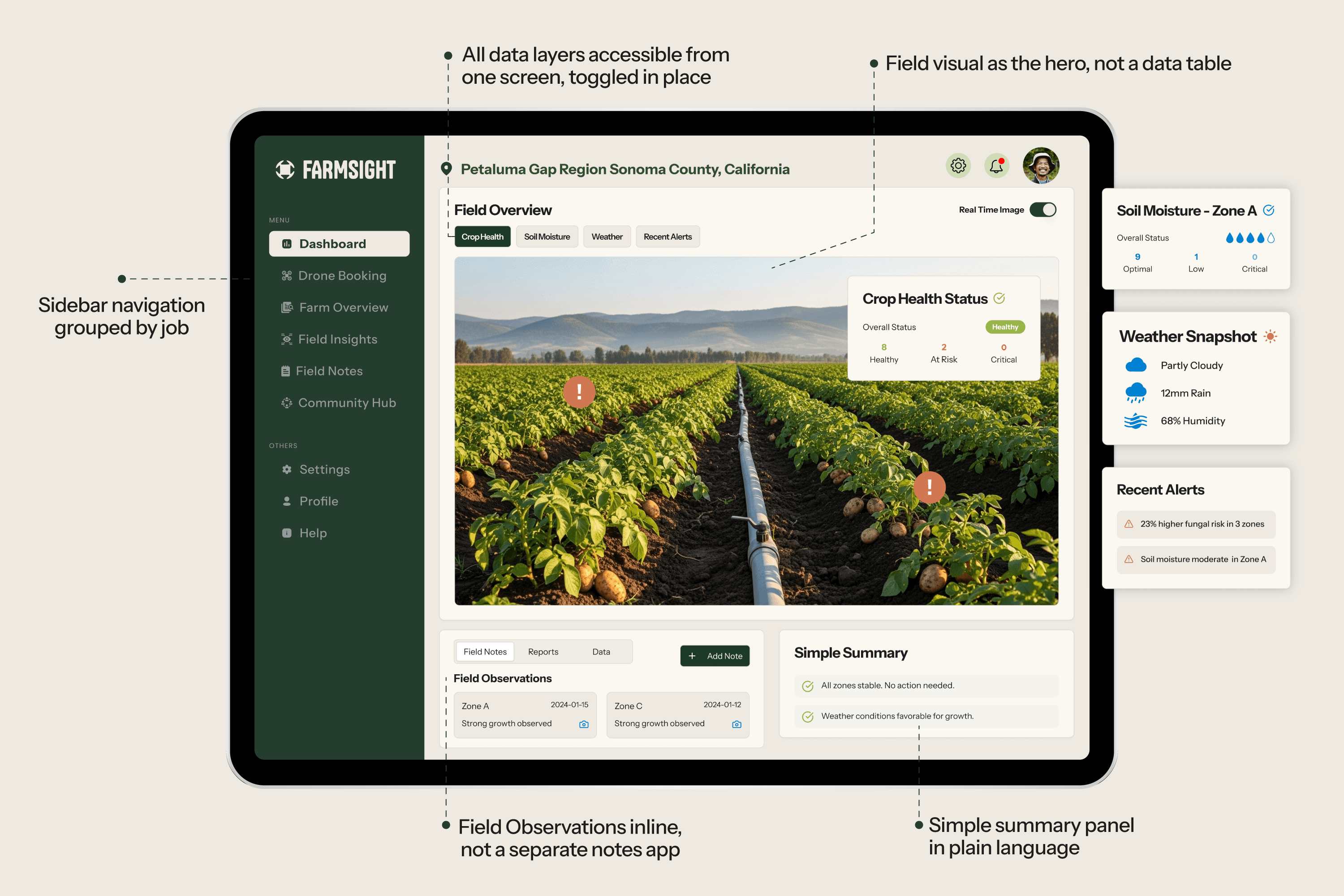
Dashboard:
Answers the farmer's first worry of the day. Field visual + crop health status + urgent AI actions. Calm when things are fine, urgent when they aren't.
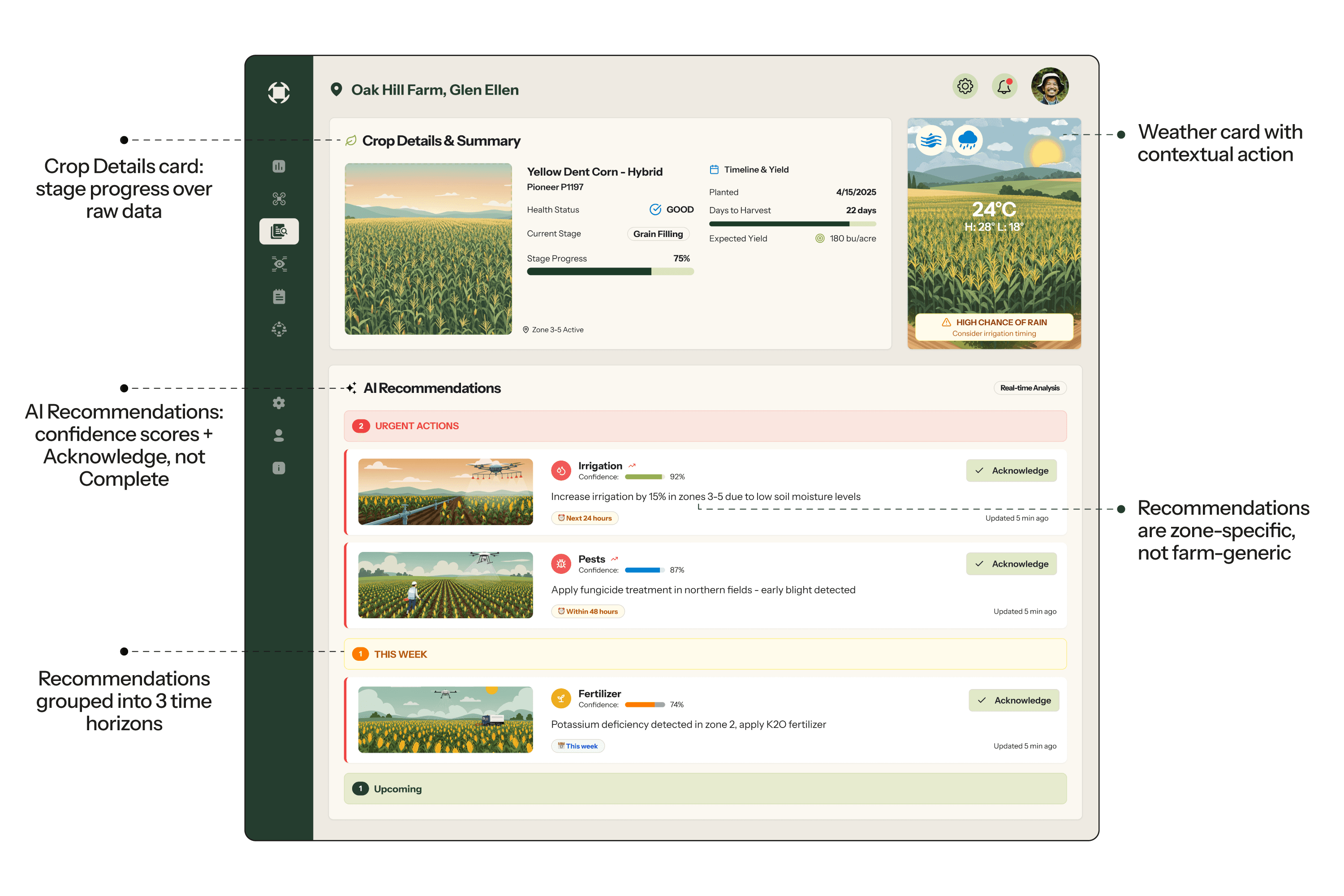
Farm overview:
Crop type, growth stage, harvest timeline, live weather, and AI recommendations on one screen. Actions are framed as suggestions with confidence scores.
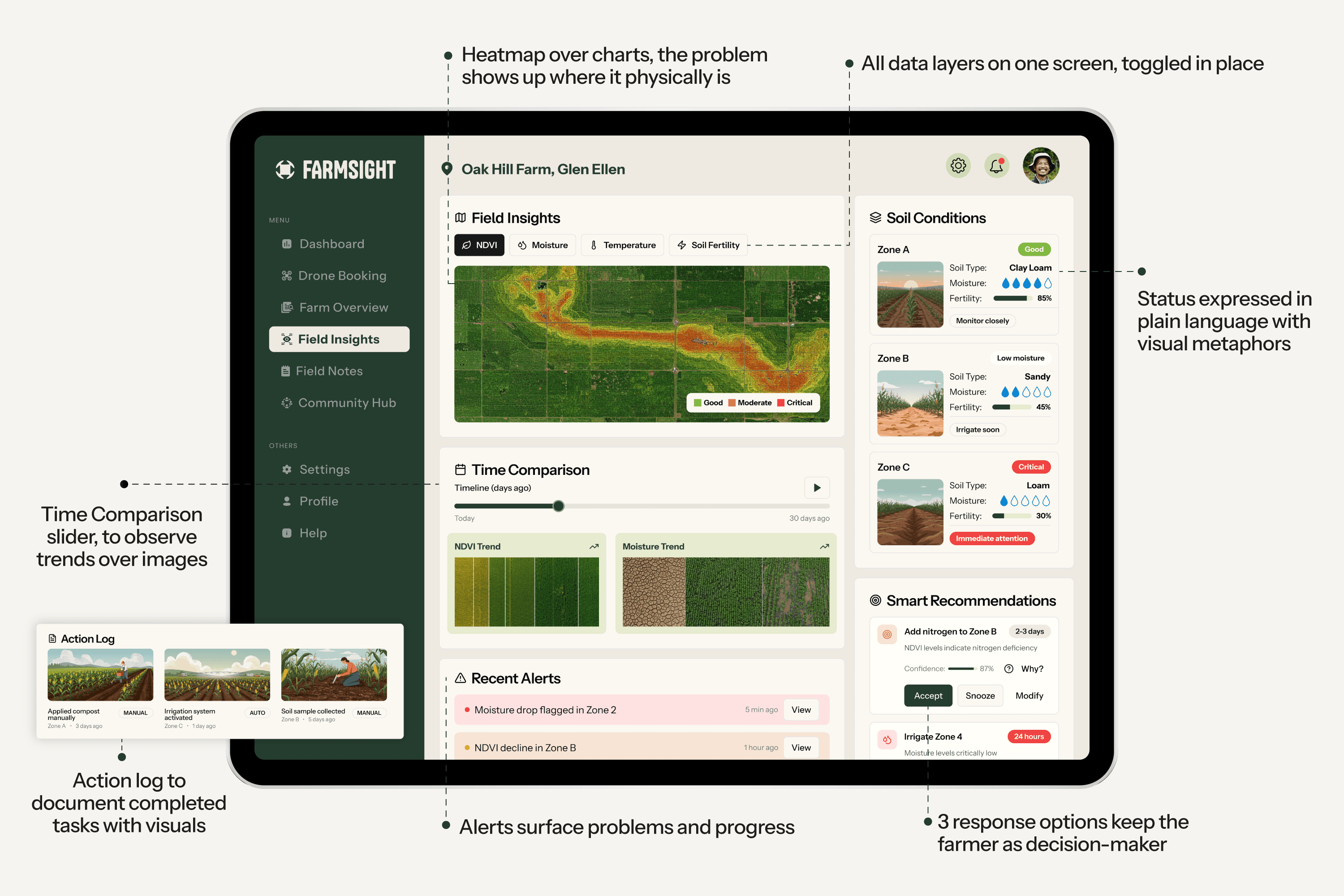
Field insights:
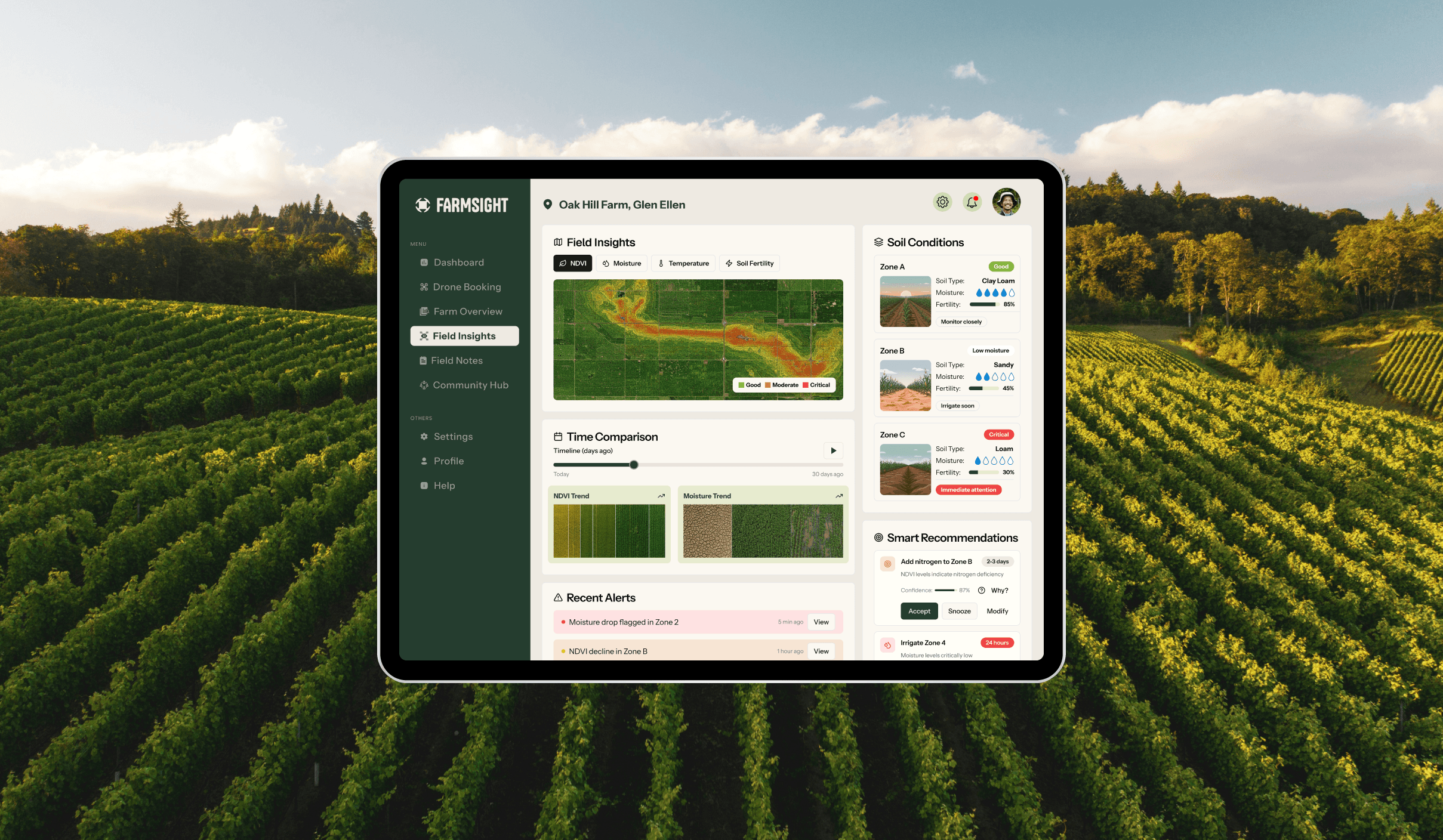
Spatial heatmaps for NDVI, moisture, temperature, fertility. Layer toggle keeps spatial context. Time comparison shows whether a zone is improving or degrading. Recommendations are zone-specific, not generic
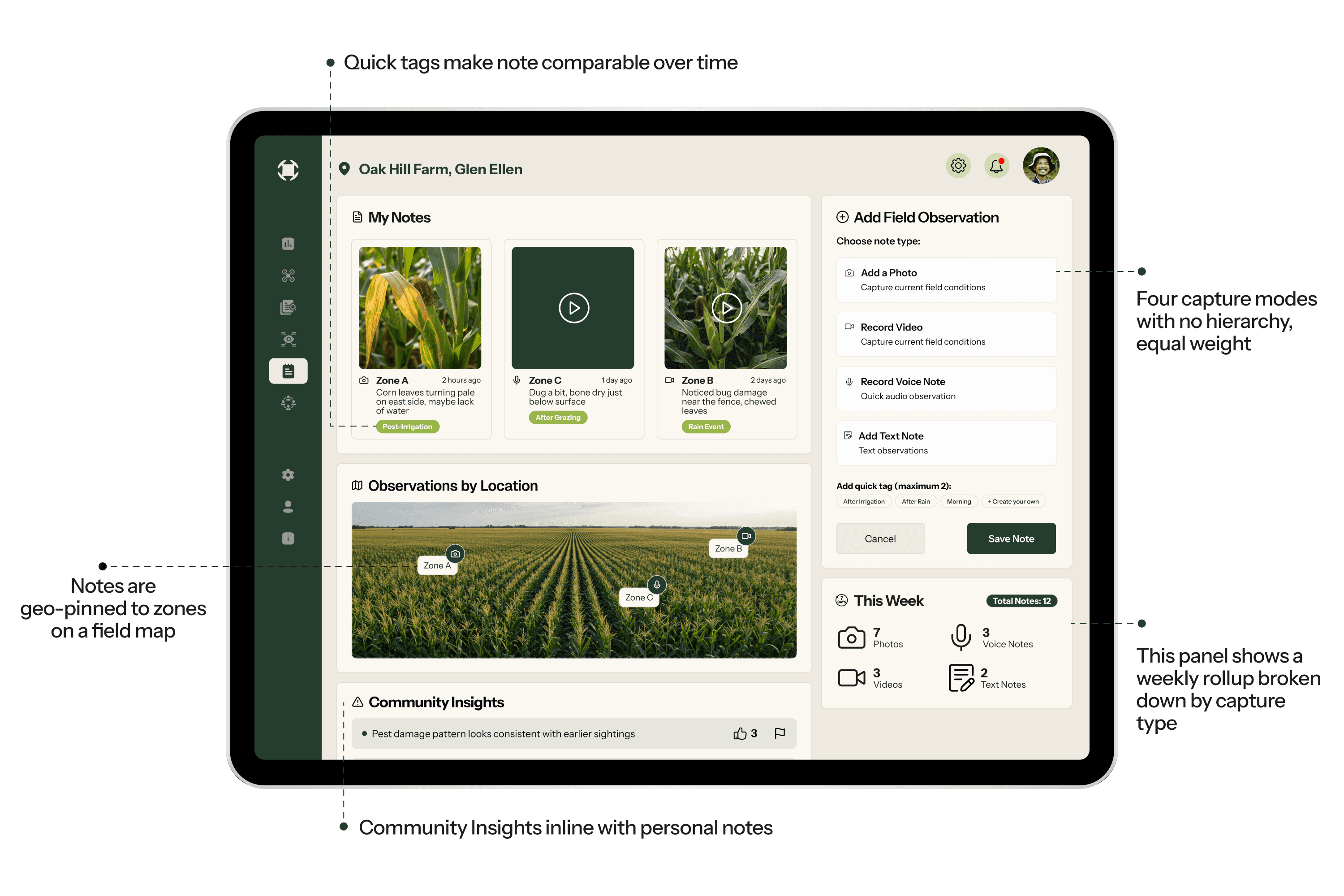
Field notes:
Audio, photo, text, video, or voice, whichever is fastest mid-walk. Geo-tagged to the zone. Reviewable over time. Field walks become part of the data record.
Mobile notifications: Tablet-first app with mobile alerts only for quick feedback on upcoming and completed farm actions.

Speculative outcomes at scale
Based on existing smart farming research. If adopted by 500 small farms across water-scarce western US regions: